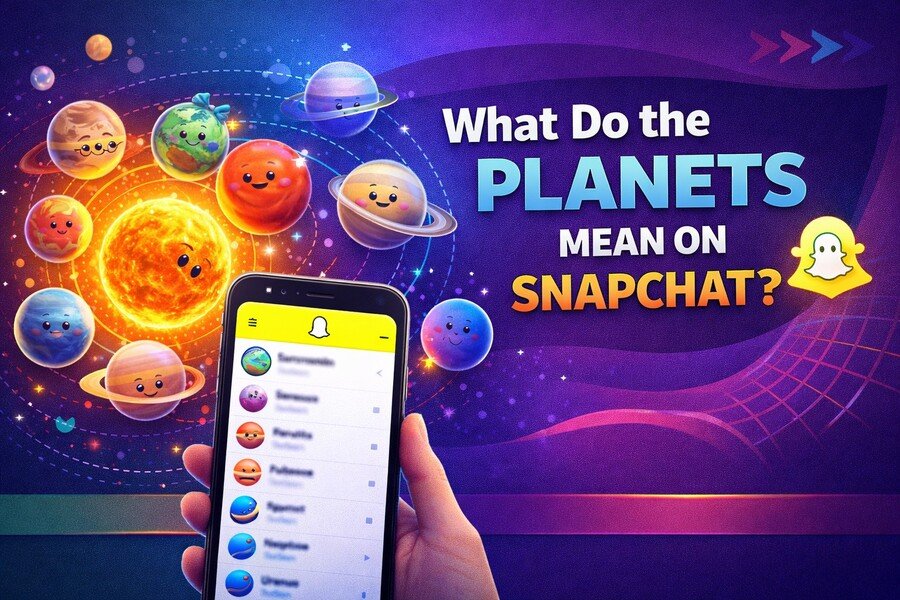
Snapchat, a platform known for its creative features, offers a unique and fun way to interact with friends: the “Friend Solar System.” This system is part of Snapchat+ and adds a cosmic twist to your connections. Understanding the planets on Snapchat can help you see your social circle in a whole new light. Each friend in your best friend list is represented by a planet, each one reflecting the frequency of your interactions. This feature provides a playful way to gauge your closeness with others, making it a fun social tool.
In this article, we’ll explore how the Snapchat planet system works, what each planet represents, and how to use it to better understand your friendships. If you’re a frequent user of Snapchat and want to know how to interpret this feature, keep reading.
What Is the Snapchat Solar System?
Snapchat’s solar system is a ranking system for your closest friends. This feature is available to Snapchat+ subscribers, and it adds an element of fun and engagement to your social interactions. The solar system visually represents your top 8 friends, ranking them based on how often you interact with them. The more you communicate with a friend, the closer they get to the “sun,” represented by the planet Mercury.
Each planet has its own distinct position and meaning in the solar system. From the inner planets to the outer planets, they all signify the closeness of your relationship with that person on Snapchat. As a result, you’ll notice that your best friend might appear closer to the sun, while others rank lower.
Understanding the Planets in Snapchat’s Solar System
Snapchat assigns each of your friends a planet based on how often you interact. The planets are ranked in the following order:
- Mercury: Your closest friend, frequently interacting with you on Snapchat.
- Venus: The second closest, but not as frequent as Mercury.
- Earth: A friend who’s actively engaged with you but not as high-ranking as Venus.
- Mars: Your fourth closest, based on recent communication.
- Jupiter: A friend you engage with occasionally, but not as often.
- Saturn: A more distant friend in terms of interactions.
- Uranus: One of your lesser-interacted friends.
- Neptune: The most distant in your solar system, reflecting minimal interaction.
These rankings are not static and can change based on your daily activity. The more you engage with someone, the more likely they’ll move up in the solar system. As the interactions change, so will the positions of the planets.
How Does the Snapchat Solar System Rank Your Friends?
The Snapchat solar system ranks your friends based on the frequency and intensity of your interactions. This means your friend’s position in the solar system isn’t permanent and can shift with changes in your activity on the app. Snapchat tracks interactions like messages, snaps, and streaks to determine the ranking.
The system is private, so only you can see where your friends rank in your solar system. You won’t be able to see others’ rankings, making this feature a personal insight into your Snapchat relationships. If you’re wondering how often you need to interact with a friend to move them closer to the sun, Snapchat considers daily engagement as a key factor.
How to Activate the Friend Solar System on Snapchat
If you’re a Snapchat+ subscriber, activating the solar system feature is simple. You need to go to the settings menu, where you’ll find an option to toggle the Friend Solar System on. Once activated, your top 8 friends will be ranked in your solar system.
This feature is automatically turned off for new Snapchat+ users, so make sure to manually activate it if you’re interested in seeing where your friends rank. You can also turn the feature off anytime if you prefer not to see it.
Is the Friend Solar System Feature Only Available to Snapchat+ Users?
Yes, the Friend Solar System is a Snapchat+ exclusive feature. Snapchat+ offers additional perks for users who subscribe to the premium service, such as access to exclusive filters, longer story durations, and the Friend Solar System feature. The subscription also includes access to other unique features like the Snapchat+ badge and ghost trails.
If you’re not yet a Snapchat+ user, you won’t be able to use the Friend Solar System feature. However, the free version of Snapchat still offers various other features like streaks and the ability to view friends’ stories.
What Does It Mean When a Friend Is Closer to the Sun in Your Solar System?
If one of your friends appears closer to the sun (represented by Mercury), it means that you’ve been engaging with them more frequently on Snapchat. This friend is likely someone with whom you have a close and active relationship. Whether it’s sharing daily snaps, texting each other often, or maintaining streaks, your consistent interaction places them closer to the center of your Snapchat universe.
Conversely, if a friend is further out in the solar system, it means your interactions have been less frequent. While it doesn’t mean you’re not friends, it simply reflects the level of engagement you have with them on the platform.
How Can You Use the Friend Solar System Feature for Better Friend Interactions?
Understanding where your friends rank in your Snapchat solar system can help you manage your relationships more effectively. If you notice that a friend has moved closer to the sun, it might be a sign to reach out more often to maintain that closeness. Similarly, if someone is moving further out, it could be a cue to engage with them more to revive your connection.
You can also use this feature to track your most loyal friends by watching who consistently ranks near the top. The solar system offers a unique way to see who values the connection as much as you do.
Can You Remove Friends from Your Solar System?
While you can’t manually remove friends from your solar system, their position is directly influenced by your interaction frequency. If you stop interacting with a friend, they’ll gradually move further out in your solar system. If you want to avoid a particular friend being ranked too high, you can simply reduce your interactions, and their position will naturally drop.
However, the feature is designed to showcase the people you interact with most, so removing someone through interaction is the only way to influence their ranking.
The Role of Streaks in the Solar System Ranking
Streaks play an important role in determining your solar system rankings. A streak is a count of consecutive days you’ve exchanged snaps with a friend, and it shows Snapchat’s way of tracking active interactions. A long streak with someone can significantly boost their position in your solar system, bringing them closer to the sun.
If you want to improve a friend’s ranking, consider maintaining a daily streak with them. This will ensure that they remain high in your solar system, strengthening your Snapchat bond.
Exploring the Friend Solar System and Friendships on Snapchat
The Friend Solar System provides a fascinating look at your friendships on Snapchat. By tracking the interactions with your closest friends, it gives you insights into how you relate to others on the platform. The planets represent not only your level of communication but also the strength of your social connections.
This system is also a great way to keep track of friends who are consistently active on Snapchat. By observing who stays closest to the sun, you can understand who values maintaining communication on the app as much as you do.
Conclusion
The Friend Solar System on Snapchat is a fun, interactive way to visualize your friendships. By seeing how your friends rank in the system, you can learn more about your social relationships and how active you are with others on the platform. Whether you’re using it for social fun or as a tool to improve your Snapchat interactions, it adds a unique element to the app. Understanding the planets’ meaning and using them to track your interactions can help you strengthen your friendships and stay more connected.
As a Snapchat+ user, you now have an engaging way to track who’s closest to you. So why not check out your solar system today and discover who’s your #1 friend?

Brian Farrell
Brian Farrell is an experienced technical writer with a strong background in software development. His expertise in coding and software systems allows him to create clear, detailed documentation that bridges the gap between complex technical concepts and user-friendly guides. Brian's passion for technology and writing ensures that his content is both accurate and accessible, helping users and developers alike understand and navigate software with ease.