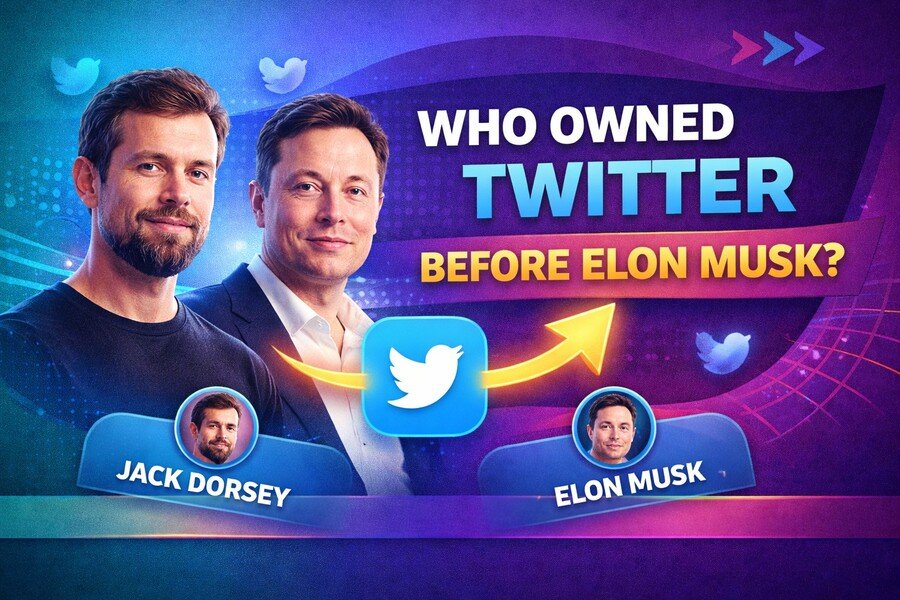
Meta Title: Who Owned Twitter Before Elon Musk? A Deep Dive into Twitter’s Ownership History
The acquisition of Twitter by Elon Musk in 2022 sent shockwaves through the tech world. However, the path to Musk’s takeover of the social media giant was a journey with multiple ownership transitions and major shifts. Understanding who owned Twitter before Elon Musk provides valuable context on the platform’s evolution, its challenges, and its eventual transformation. In this article, we will delve into the key figures and events that shaped Twitter’s ownership history before Musk’s acquisition.
Twitter’s Founders and Early Ownership
Twitter’s inception traces back to 2006, when it was co-founded by Jack Dorsey, Biz Stone, Noah Glass, and Evan Williams. The platform was initially a project to help people share status updates, but it quickly evolved into a global communication tool. The founders maintained significant control over the company during its early years, with Dorsey serving as CEO for a brief period before stepping down.
In its early years, Twitter was privately owned, with the founding team holding the majority of shares. However, as Twitter’s user base grew and the platform gained traction, it caught the attention of investors. Twitter went public in 2013, which marked a significant shift in its ownership structure.
The Public Offering and the Rise of Major Investors
Twitter’s initial public offering (IPO) in November 2013 was a landmark event in the company’s history. The stock was offered at $26 per share, and Twitter’s valuation skyrocketed to $31 billion. The IPO allowed a broader range of investors, including institutional ones, to buy stakes in Twitter, effectively reducing the control of the founding team.
As Twitter became a publicly traded company, ownership was spread among various institutional investors and individual shareholders. The largest stakeholders included investment firms like Vanguard Group and BlackRock, which held significant shares. However, despite the dilution of the founders’ influence, Jack Dorsey remained involved with the company, eventually returning as CEO in 2015.
Key Leadership Changes Before Musk’s Arrival
Before Elon Musk’s acquisition, Twitter underwent several significant leadership changes that impacted its direction. One of the most notable was the departure of co-founder Jack Dorsey as CEO in 2008. He was replaced by Evan Williams, another co-founder, who took over the role of CEO during the company’s early growth phase.
In 2015, Dorsey returned to Twitter as CEO, and under his leadership, Twitter sought to expand its influence beyond just short text updates. However, Dorsey’s leadership was marked by challenges in increasing user growth and engagement, which led to criticism. In 2021, after pressure from investors and board members, Dorsey stepped down for the second time, paving the way for Parag Agrawal to take over as CEO.
Parag Agrawal and the Shift Toward Private Ownership
Parag Agrawal’s tenure as CEO was brief but impactful. Agrawal, who was Twitter’s Chief Technology Officer (CTO) before becoming CEO, faced an uphill battle in revitalizing the platform’s growth. Despite efforts to improve Twitter’s profitability and innovation, Twitter continued to struggle with user growth and public perception.
In 2022, the dynamics at Twitter shifted drastically. Elon Musk made his move to acquire the platform, first buying shares and becoming Twitter’s largest shareholder. His interest in Twitter grew out of his desire to create a platform that could better serve free speech. As his stake in the company grew, Musk began to push for a complete buyout.
The $44 Billion Acquisition by Elon Musk
In April 2022, Elon Musk made a $44 billion offer to purchase Twitter. This acquisition marked the end of Twitter’s existence as a publicly traded company. Musk’s motivations for the purchase included the desire to transform Twitter into a platform that prioritized free speech, an area where he felt the company had been too restrictive.
After months of negotiation, legal hurdles, and a few controversies, Musk’s purchase was finalized in October 2022. The acquisition led to a dramatic restructuring of Twitter, with massive layoffs, changes in policy, and a rebranding of the platform as “X” – Musk’s vision for a super app that would encompass social media, payment systems, and more.
The Role of Saudi Investors in Twitter’s Ownership
A notable chapter in Twitter’s ownership history is the involvement of Saudi investors. Prince Alwaleed bin Talal, a member of the Saudi royal family, was one of Twitter’s largest individual investors long before Musk’s acquisition. In 2015, Prince Alwaleed made headlines when he invested $300 million in Twitter, signaling his belief in the platform’s potential despite its ongoing struggles.
Alwaleed’s investment helped stabilize Twitter during difficult financial periods. When Musk announced his acquisition, he revealed that the Saudi royal family, along with other investors, would continue to hold significant stakes in the company. The involvement of Saudi investors was one of the reasons for the international attention that Musk’s acquisition garnered.
The Influence of Jack Dorsey on Twitter’s Evolution
Jack Dorsey played an integral role in shaping Twitter’s direction, both as a founder and as CEO. His focus on simplicity and brevity resonated with millions of users, and the platform’s early success was largely attributed to his vision. However, Dorsey’s leadership also faced challenges, particularly in scaling the platform and addressing controversies over content moderation.
Even after stepping down as CEO for the second time, Dorsey’s influence remained evident. He continued to hold a stake in the company and even played a role in Musk’s acquisition. His departure from Twitter marked the end of an era, but his imprint on the platform remained.
It’s like learning how to generate content with AI. The process of AI content writing is simple and effective, making it easier to create high-quality content for any purpose. Twitter’s adoption of AI has been massive since Jack sold the company.
Twitter’s Transition to X: Musk’s Vision
With Musk’s acquisition of Twitter and the subsequent rebranding to X, the company underwent a massive transformation. Musk’s vision for X involves much more than a traditional social media platform. He aims to create an all-in-one app, integrating social networking, payment systems, and other services under one umbrella.
The transition to X marked a radical departure from the platform’s original identity. The iconic bird logo was replaced, and many features were restructured to align with Musk’s vision. Despite the upheaval, Musk’s determination to reshape the platform has sparked both excitement and skepticism.
The Legacy of Twitter Before Musk’s Acquisition
Before Musk’s acquisition, Twitter had built an undeniable legacy as a powerful tool for communication and social change. It played a pivotal role in political discourse, movements like the Arab Spring, and real-time news coverage. Twitter’s role in shaping global conversations made it one of the most influential platforms in the world.
Despite its challenges, Twitter maintained a loyal user base and a unique position in the social media landscape. It was a place for public figures, activists, and everyday users to share their thoughts and ideas, making it a cornerstone of digital communication.
Twitter didn’t adopt AI massively before Elon Musk came into the picture, even though the technology wasn’t fully advanced at the time. However, the development of how to disguise AI writing is crucial for content creators and businesses looking to maintain a human touch in their writing.
The Future of Twitter Under Elon Musk’s Leadership
As Twitter transitions into X, it’s clear that Musk is positioning the platform for a new chapter. His focus on free speech, digital payments, and long-form content is aimed at expanding X’s role in the global economy. While the future remains uncertain, X has the potential to disrupt traditional social media models and offer new opportunities for users and businesses alike.
In conclusion, the history of Twitter’s ownership before Elon Musk is a story of innovation, challenges, and transformation. From its founders to the leadership changes, Twitter’s evolution was marked by a series of pivotal moments that set the stage for Musk’s acquisition. As X continues to grow, the legacy of its predecessors will undoubtedly shape its future trajectory.
Storytelling thrives on X and other social media platforms. So, if you are curious about AI-powered story generators, you can explore tools that generate compelling narratives tailored to your needs.
Conclusion
Before Elon Musk’s acquisition, Twitter underwent several ownership changes, key leadership transitions, and strategic shifts. From its humble beginnings under Jack Dorsey to the involvement of significant investors like Saudi royalty, Twitter’s history is a testament to the impact of social media on global communication.
With Musk’s vision for X, the platform is entering a new era, one that could reshape the way we interact online. The legacy of Twitter remains a crucial part of its identity as it continues to evolve.

Brian Farrell
Brian Farrell is an experienced technical writer with a strong background in software development. His expertise in coding and software systems allows him to create clear, detailed documentation that bridges the gap between complex technical concepts and user-friendly guides. Brian's passion for technology and writing ensures that his content is both accurate and accessible, helping users and developers alike understand and navigate software with ease.